Referral codes, tracking links and proof URLs turn "I think it went well" into numbers you can check. Here's how to measure a campaign and work out cost per result.
The pitched team · · 2 min read
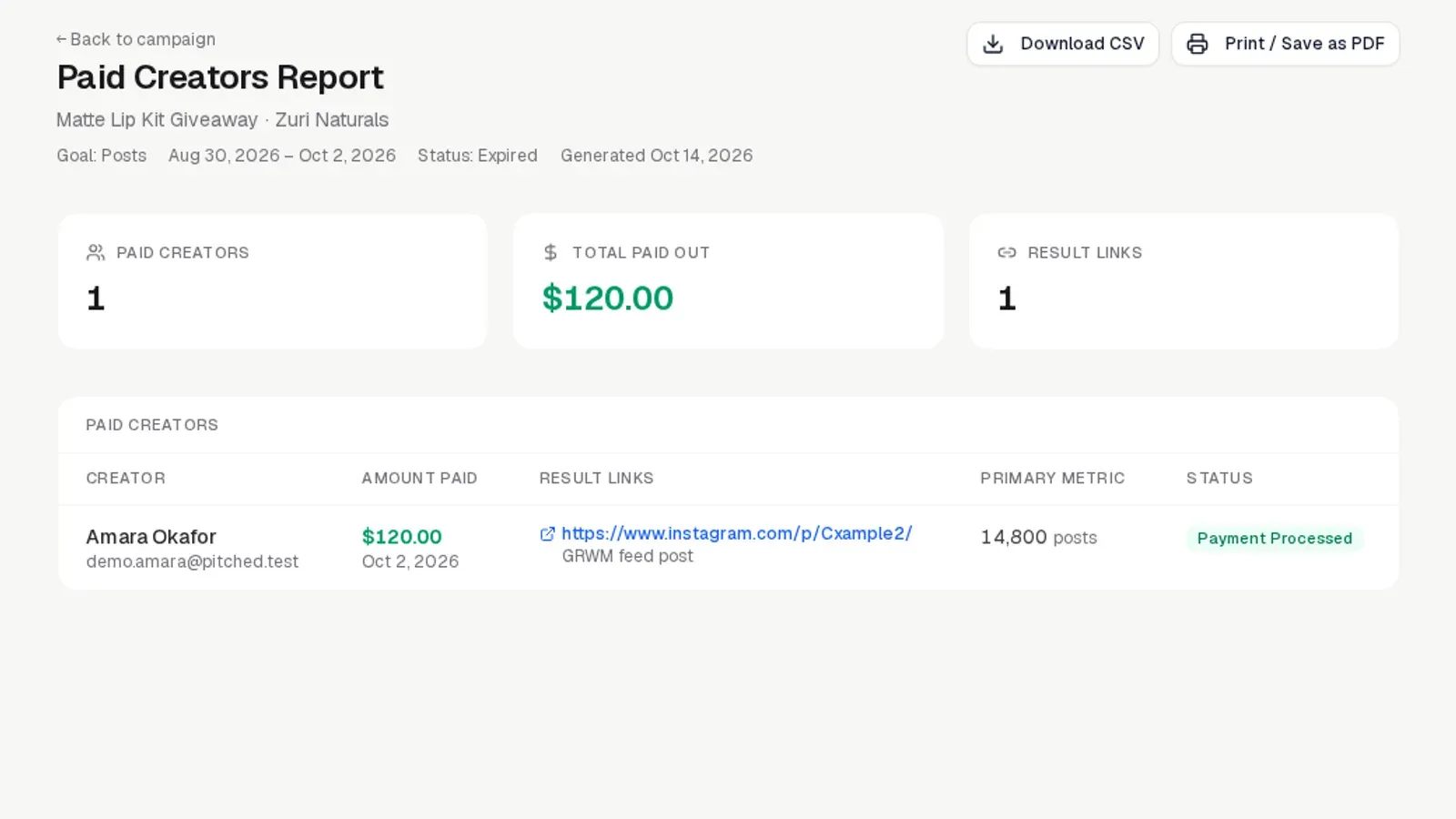
The meeting always goes the same way. Someone asks if the campaign worked, and the room goes quiet because the only evidence is that the posts looked good.
You can do better, and most of it is set up before the campaign starts.
Track the one thing your goal is about. If the goal was clicks, count clicks. If it was sales, count sales. Everything else is context.
Then give each creator a way to be counted:
On pitched, tracking links and referral codes appear on the campaign page, and the goal you choose decides which you get.
Don't take the figure on trust, and don't treat it with suspicion either. Look at three places:
If something doesn't match, ask the creator before you approve. Honest mistakes are common, and a quick message sorts most of them out.
Divide what you spent by what you got. If you paid out 500 and the campaign drove 100 sign-ups, each sign-up cost 5.
Compare that to what a sign-up is worth to you. If a customer is worth more than 5 over time, the campaign paid for itself. If not, change the brief, the creators or the goal.
Each campaign has a report page, with a CSV for sorting and filtering and a PDF for sharing. Account-level numbers, such as how much of your budget you've used and your approval rates, are in your Analytics page.
Track results and download reports walks through them.
Check the brief first. Most poor results trace back to a vague goal or a message that tried to say too much. covers both.
One email when we publish something worth your time. Unsubscribe anytime.
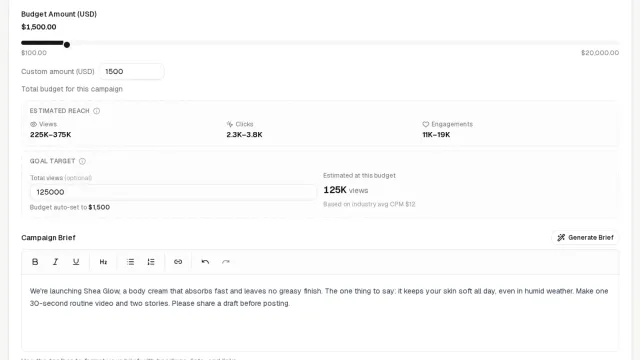
A good brief saves you two rounds of revisions. Here are the nine things every influencer brief needs, with examples, and how to fill them in on pitched.
The pitched team · 14 October 2026
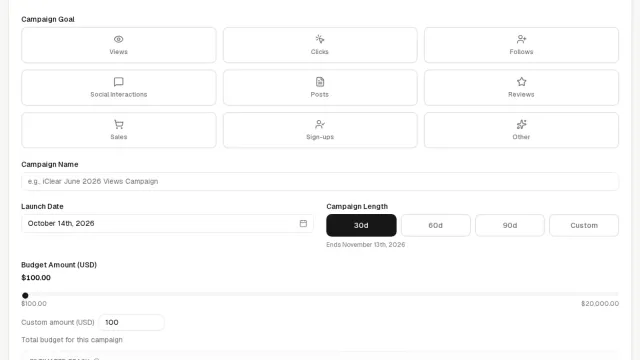
Views, clicks, follows, sales or sign-ups? How to match a goal to your business, and why picking just one makes your results easier to read.
The pitched team · 14 October 2026
Then try again with a smaller change. One variable at a time is how you learn what works.